Alan Bersten Helps Ezra Frech After Prosthetic Comes Off
Alan Bersten Helps Ezra Frech After Prosthetic Comes Off
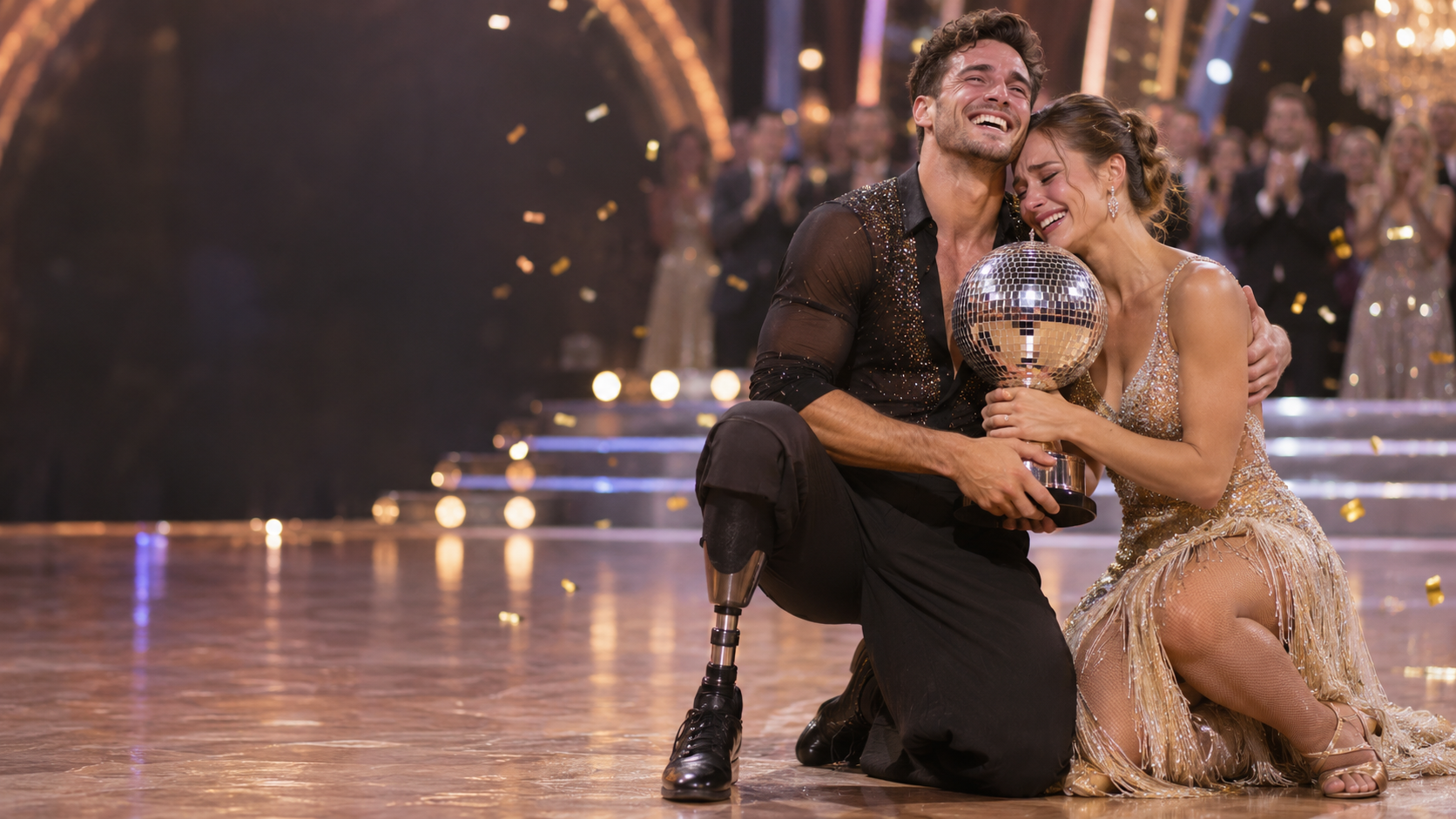
Ezra Frech’s prosthetic leg came off during an emotional finale performance on Dancing With the Stars, creating an unexpected challenge in the middle of a live routine. Professional dancer Alan Bersten reportedly helped Frech manage the moment while the performance continued.
The incident drew attention because it occurred during a high-pressure televised dance featuring Frech, a Paralympic athlete. It also showed the quick thinking required when a live performance does not go according to plan.
The story traveled because it combined two things audiences respond to: an unscripted moment on live television and a performer who kept going. Coverage split along the same event — the equipment failure, the professional cast’s reaction, and Frech’s own description of how it felt afterward.
What Happened During Ezra Frech’s Performance?
Frech’s prosthetic leg came off during the televised routine, according to BuzzFeed. The dancers had to respond without stopping the music or resetting the choreography.
The available reports do not indicate that Frech suffered an injury. The situation should therefore be described as a prosthetic equipment issue, not a medical emergency.
A live dance competition leaves little time to solve an unexpected problem. Frech had to recognize what had happened, stay connected to the music and choreography, and work with the professionals around him.
Why Equipment Failure Hits Differently in Live Dance
Choreography depends on repeatable contact between body and floor. A partner expects weight to arrive at a certain height, at a certain angle, on a certain beat. When a prosthetic component separates mid-routine, that expectation breaks: spacing shifts, balance changes, and the count keeps running.
A costume malfunction can often be danced through because the body’s mechanics stay the same. A prosthetic failure changes the mechanics themselves, which is why it demands an immediate adjustment rather than a covered-up one.
What the Reports Do and Do Not Establish
Verified: the prosthetic came off during the televised performance Source 7. Verified: members of the professional cast responded with support Source 1, Source 9. Not established in the supplied summaries: the exact second it happened, which element of the prosthesis failed, how many bars of music passed before the routine adjusted, or how the performance ended. Those details require the original broadcast and full interviews, not inference.
Alan Bersten Reportedly Assisted Frech
E! News reported that Dancing With the Stars professional Alan Bersten spoke publicly after assisting Frech during the incident. Source 1
The supplied report summary does not provide enough verified detail to reconstruct exactly how Bersten intervened or to quote his comments. The supported conclusion is narrower: Bersten assisted Frech during an unexpected moment and later addressed the incident publicly.
That support did not replace Frech’s performance. It helped keep attention on Frech while allowing the routine to continue. In live performance, assistance may involve maintaining spacing, offering a cue or helping another dancer navigate an unplanned transition. The exact action Bersten took should not be stated without the original report or a full transcript.
What “Assistance” Can Look Like Mid-Routine
On a live floor, help is usually small and physical rather than a spoken explanation. It can mean re-establishing spacing so a partner does not collide, offering a hand or a frame at the moment weight transfers, closing a gap in formation, or steering the routine toward a section the performer can safely reach. None of that reads as rescue to the audience; it reads as choreography.
This is why the story is easy to misdescribe. “Helped him” could mean any one of those things, and the supplied summaries do not specify which. What the reports support is the category of action — practical, in-the-moment support from a colleague — not a step-by-step account.
Why a Colleague Steps In Rather Than Stops
Cutting the music on live television is a production decision, not a dancer’s decision. Performers are trained to protect the continuity of the number and let the control room decide whether to cut away. Bersten’s reported response fits that training: keep the routine moving, keep the featured performer oriented, sort out the equipment afterward.
Frech Described the Moment as Overwhelming
Frech reportedly said he “blacked out” when his prosthetic came off during the emotional finale dance. Source 3
In context, the phrase conveys how intense and disorienting the experience felt. It should not be interpreted as a verified statement that Frech fainted, lost consciousness or experienced a medical episode.
The incident interrupted a carefully prepared routine, but Frech remained engaged with the performance and the dancers around him. The available summaries do not provide enough detail to describe every movement or the exact sequence after the prosthetic came off.
Reading the Quote Accurately
Two errors are easy to make. The first is literal — turning “blacked out” into fainting or loss of consciousness, which the reports do not support. The second is dismissive — treating the phrase as modesty and moving past it. The quote is the clearest available evidence of how the disruption felt to the person inside it, and it is a large part of why the story resonated beyond a dance audience.
Performer language under pressure often describes narrowed attention rather than memory loss: acting on training while the memory of the moment forms afterward. Nothing in the reports suggests anything beyond that reading, and nothing in them rules it out.
Daniella Karagach Also Offered Support
TV Insider reported on what Daniella Karagach called out to Frech after his prosthetic came off. Source 5 The supplied summary confirms that Karagach called out to Frech but does not provide a verified exact quote.
A verbal cue can help a performer remain oriented during an unexpected interruption. However, the purpose of Karagach’s comment should not be inferred without the full context.
Why a Shouted Cue Works
In a loud ballroom, with music and audience response competing, a short verbal cue is often faster than a visual one because it does not require the other performer to be looking in the right direction. A cue can redirect attention to the next mark, confirm that a partner is still in position, or simply signal that someone else has registered the problem and is handling it. All three reduce the load on the performer who still has to dance.
Parade also reported that Karagach praised a professional dancer for helping preserve Frech’s freestyle performance. Source 9
Other coverage identifies Bersten as the professional who assisted Frech, but the precise connection should remain attributed to the reports. The broader point is clear: the professional cast responded with practical support rather than leaving Frech to manage the disruption alone.
Why the Moment Mattered
Frech’s appearance brought a Paralympic athlete into a mainstream dance competition. The prosthetic issue created an opportunity to discuss adaptive performance and accessibility, but it should not become the entire story.
Frech should be recognized for his preparation, artistry and agency. His disability and prosthetic are part of his experience, but they should not reduce him to an inspirational narrative for non-disabled viewers.
The moment also demonstrated the value of teamwork in live television. Bersten’s reported assistance and Karagach’s reported encouragement helped protect the flow of the routine while keeping Frech at its center. Accepting help during a live performance reflects trust and cooperation, not weakness.
Accessibility Is a Production Question, Not Only a Personal One
Adaptive performance depends on logistics as much as on individual effort: rehearsal time with the actual equipment, a plan for what happens if a component fails, and a cast that knows how to adjust spacing without being told. The response described here is a visible example of the third item. The first two are invisible, and the reports do not describe them, so they should not be assumed in either direction.
Two Narratives to Avoid
The first is the disaster narrative, in which the incident becomes the defining fact of Frech’s appearance. The second is the triumph narrative, in which the disruption exists to demonstrate resilience for an audience that is not disabled. Both pull attention away from the work Frech came to do. A more accurate framing keeps the equipment failure as one event inside a performance — handled by professionals, judged on the performance.
Frequently Asked Questions
What happened to Ezra Frech on Dancing With the Stars?
Frech’s prosthetic leg came off during an emotional finale performance. Reports describe support from members of the professional cast while the routine continued. Source 7 No report indicates an injury, so the incident is best described as an equipment issue.
Who helped Ezra Frech?
Alan Bersten was reported to have assisted Frech. Daniella Karagach also reportedly offered support during the moment. The precise nature of Bersten’s assistance should follow the verified E! News report. Source 1 The summaries confirm the category of help, not the choreographic detail.
What did Frech mean when he said he “blacked out”?
The phrase described the intensity of the moment. It should not be presented as proof that he lost consciousness. Source 3 Treat it as a description of pressure and disorientation.
What did Daniella Karagach say to Frech?
TV Insider confirmed that Karagach called out to Frech but did not provide a verified exact quote in the supplied summary. Source 5 The wording should wait for the original clip or transcript.
Did Frech finish the performance?
The available summaries describe support that helped the performance continue, but they do not provide enough verified detail to state the complete sequence or ending. Any specific claim about the final seconds of the routine needs the broadcast itself, not a secondhand recap.
Conclusion
Ezra Frech’s prosthetic leg came off during a Dancing With the Stars finale performance, and Alan Bersten reportedly assisted him as the cast adapted in real time. Karagach also reportedly offered an onstage cue and later praised professional support.
The incident showed how preparation, adaptability and teamwork can protect a live performance without taking agency away from the featured performer. The details still worth confirming are procedural — the moment of the failure, the exact assistance, the closing sequence — and they belong to the broadcast record, not to speculation.
Related Articles
-
 Brad Pitt and Angelina Jolie Settle Miraval Winery Lawsuit
-
 Horoscope for November 26, 2026: All Zodiac Signs
-
 Andy Taylor Death Claim: What Is Confirmed
-
 Andy Taylor Death Reports: What the Evidence Shows
-
 Joan Smalls Addresses Reported Fallout with Candice Swanepoel
-
 Avengers: Doomsday Eyes $270M Opening as Dune 3 Builds
-
 Ezra Frech Makes History on Dancing with the Stars
-
 Ezra Frech Recalls His DWTS Finale Prosthetic Mishap
-
 Khloé Kardashian and Malika Haqq Feud Rumors Explained
-
 Blade Runner 2099 Is More Than an AI Story
-
 Macy’s Thanksgiving Day Parade 2026: What We Know
-
 Ezra Frech Wins DWTS Season 35 Mirrorball Trophy
-
 Nick Cave and India Win Venice Biennale Awards
-
 Horoscope for November 25, 2026: All Zodiac Signs
-
 Taylor Swift Vegas Showgirl Lawsuit: What We Know
-
 DWTS Season 35 Winner: What Is Verified